

When November arrives, Japanese gardens in snowy regions begin preparing for winter. The most iconic of these preparations is yukitsuri, literally “snow hanging.” You may have seen photographs of pine trees crowned with dozens of ropes stretched into a graceful cone. In this article, we introduce yukitsuri — a clever way of protecting garden trees that has also become a beloved symbol of the season.
1. Yukitsuri: Preparing Branches for Winter
Yukitsuri is the practice of keeping tree branches from breaking under the weight of accumulated snow. It has long been carried out in regions such as Hokuriku, on the Sea of Japan coast, where the snow is wet and heavy. In the best-known method, a pole is set up beside the trunk, and ropes are run from its top out to the branches, supporting them one by one. There is no single way to tie them; the method is adapted to the size and shape of each tree. By sharing the weight of the snow, the ropes protect the carefully shaped branches that gardeners have tended over many years.
2. A Protective Craft Turned Winter Scenery
Although yukitsuri is first and foremost a practical technique, its beauty has made it a cherished part of the winter landscape. The yukitsuri at Kenrokuen garden in Kanazawa, Ishikawa Prefecture, is especially well known: each year the ropes begin to go up in early November, and the sight is celebrated as a sign that winter has arrived. Even in gardens where little snow falls, yukitsuri is sometimes installed simply to bring a winter atmosphere.
The taut, straight lines of rope against the soft, flowing branches of the pine — this contrast reflects the devotion of those who care for the garden year after year. As spring approaches, the ropes are removed, and the garden moves gently into the next season.
3. Bringing the Spirit of the Winter Garden Indoors
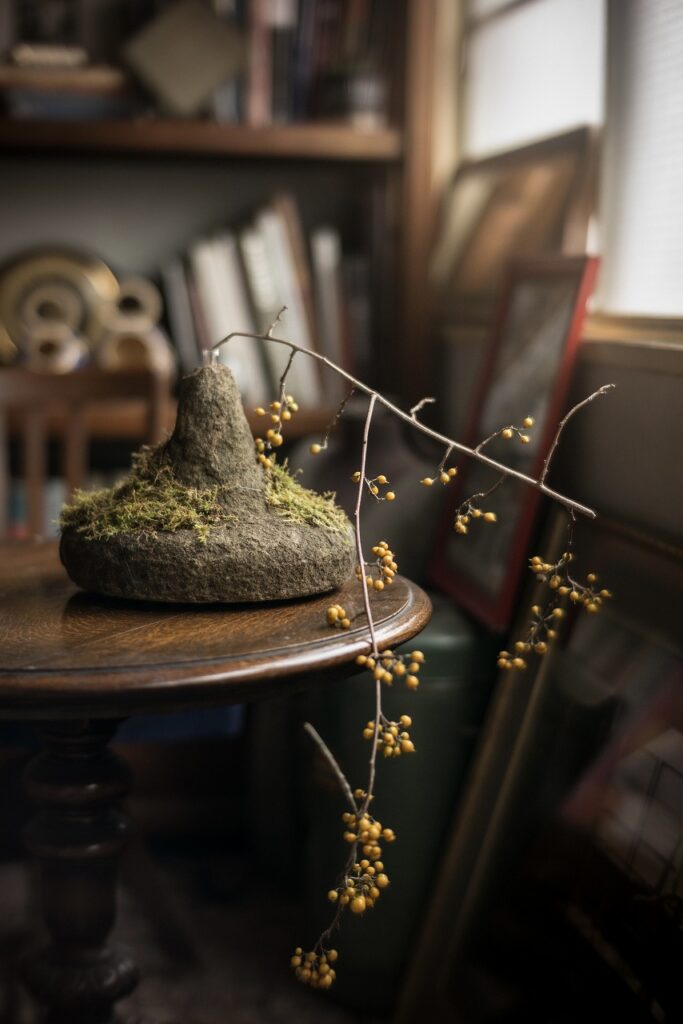
The Japanese spirit of dressing a space for the season can be enjoyed indoors, too. The Toooro “Yukimi Hōju Bud Vase” upcycles part of a hōju — the jewel-shaped finial — from a stone lantern that once stood in a real Japanese garden. Placed at the very top of a lantern, the hōju is an important element said to carry the meaning of wishes coming true. A single bare branch or a sprig of winter berries is enough to evoke a garden waiting for snow, while the reds and yellows of the berries add a gentle touch of color to a winter room.
Yukitsuri is a piece of Japanese garden wisdom in which a simple way of protecting trees has become the beauty of the season itself. As the cold deepens, why not take a moment to enjoy a scene that only winter can offer — in the garden or in your own home?
