

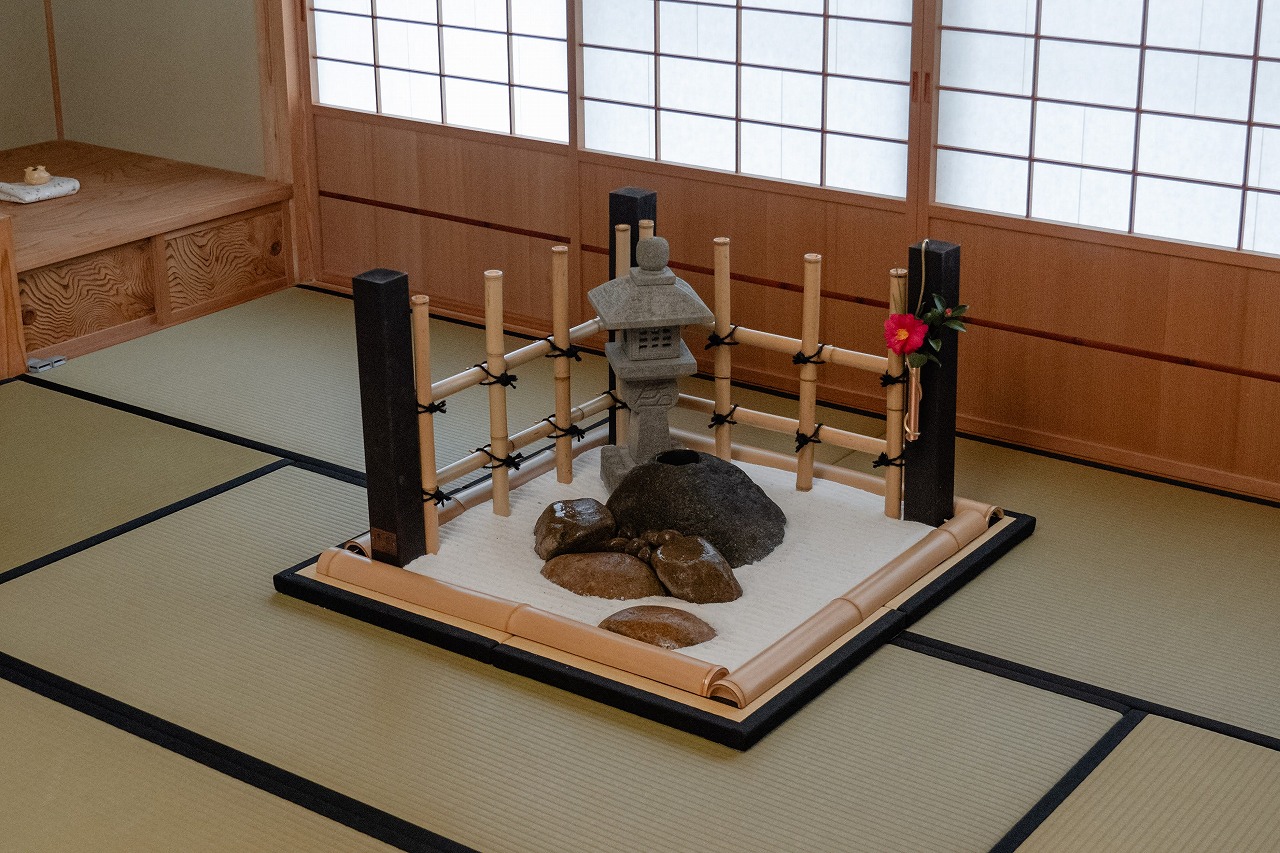
In the world of the Japanese tea ceremony, a special place is set aside where guests purify their hands and mouth before entering the tearoom. It is called the tsukubai. Rakutei 100 Series “Chanoyu” is a modular Japanese garden built around this tsukubai. In this article, we introduce the meaning of the stones in this small garden and the ways to enjoy it.

1. The Tsukubai, a Place to Purify the Heart
A tsukubai is an arrangement for washing the hands and rinsing the mouth to purify the heart. The word comes from tsukubau, meaning “to crouch.” By bending down toward the low stone water basin, it is said that one naturally feels humble. In the moments before entering the tearoom, it helps the mind step away from daily life. That is the role of the tsukubai.
2. Stones with Roles, Creating Perfect Harmony
At the center of Rakutei “Chanoyu” sits the chozubachi, the basin that holds water. To the right is the yuoke-ishi, where a bucket of warm water is placed for winter tea gatherings. To the left is the teshoku-ishi, where a light is set for evening tea. At the back left stands a stone lantern that lights the basin; in front lies the mae-ishi, the stone on which a guest stands, and beyond it, stepping stones lead to the tsukubai. Each stone has its own role, and together they create harmony. The arrangement gives form to the spirit of omotenashi, caring for guests according to the season and the hour.
Warm water is prepared in winter, and the lantern is lit at night. Thoughtful care for the person who uses it reaches every corner of this small garden.
3. A Tea Garden in a Corner of Your Room
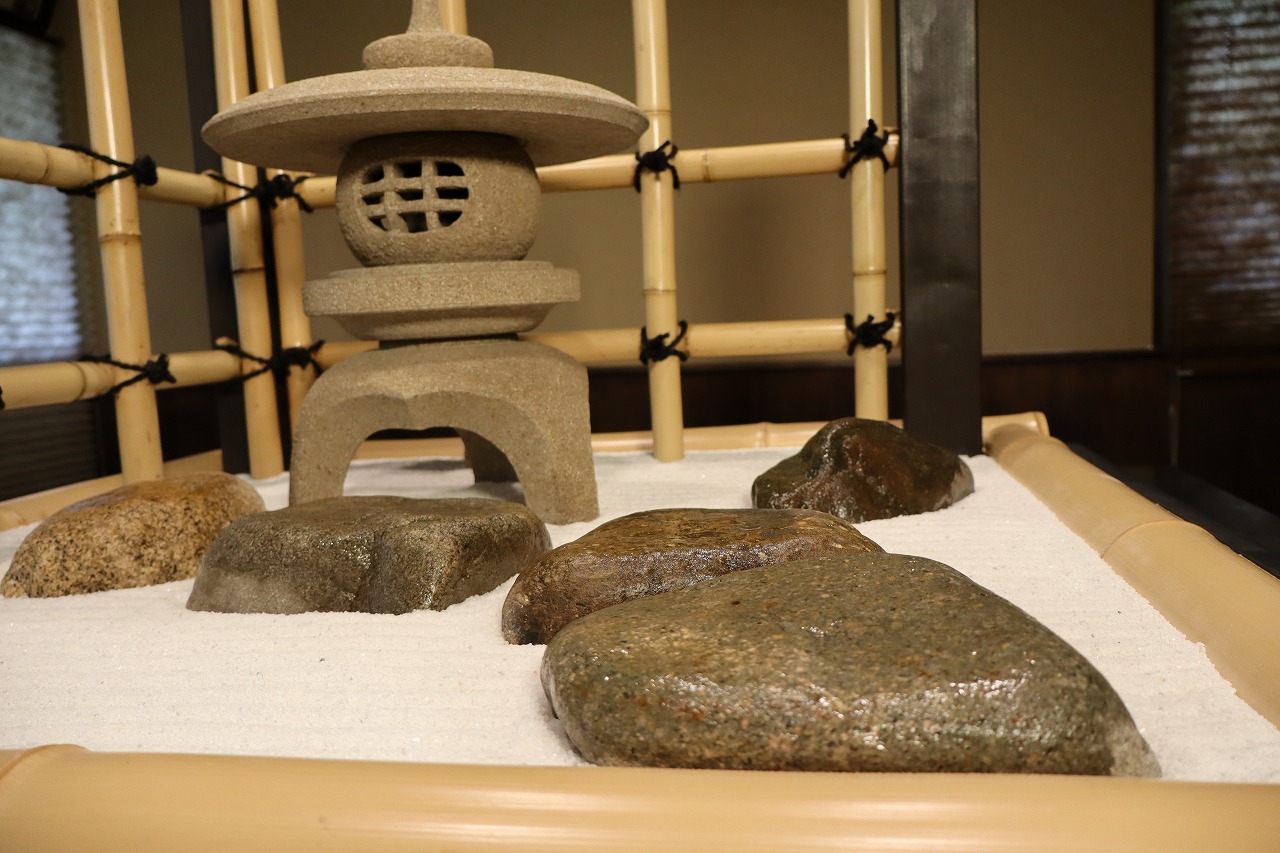
Rakutei 100 Series “Chanoyu” measures 100 cm wide, 100 cm deep and 58 cm high. When you pour water over the stones, their colors deepen, and the garden looks as if it has just been sprinkled with water. For smaller spaces, there is also the Rakutei 70 Series “Chanoyu,” 70 cm wide. Both are handmade by craftsmen, so although the layout is the same, every stone is different, and delivery may take about three months after purchase.
With a polished stainless-steel rake designed especially for Rakutei, you can level the white gravel or draw wave patterns in it. Sprinkling water on the stones and tending the patterns in the gravel: the more care you give, the more attached you become. That, too, is part of the charm of Rakutei.
Even without a tearoom, simply gazing at a small garden with a tsukubai can quietly calm the heart. Why not bring a moment of the tea ceremony spirit into your busy days?
