

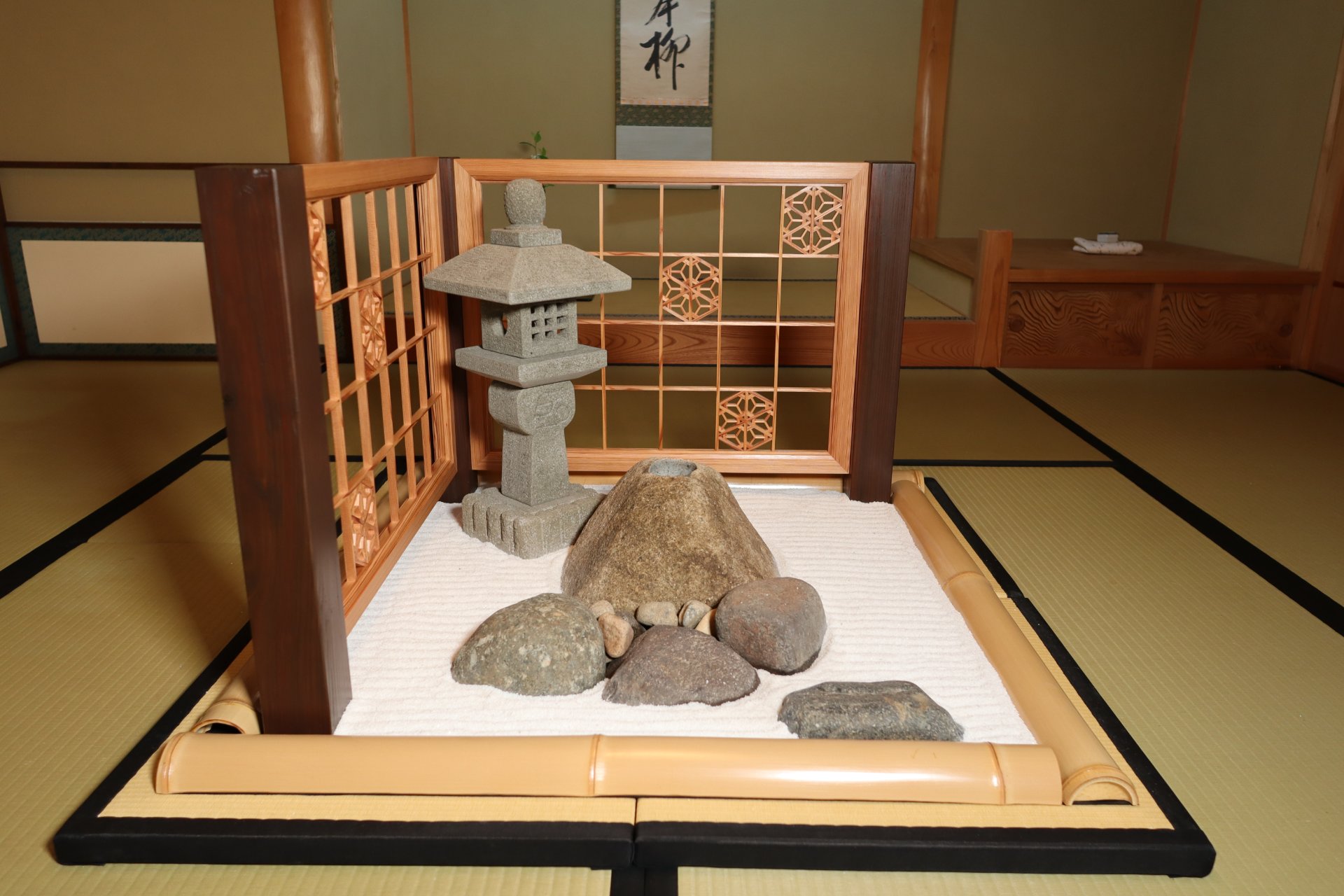
Look closely at the shoji screens or transoms of a traditional Japanese house, and you may notice slender strips of wood arranged into delicate geometric patterns. This is kumiko, a traditional Japanese woodworking craft used in fittings such as screens and doors. Without a single nail, pieces of wood are simply fitted together to create intricate designs. In this article, we explore the beauty of kumiko and introduce a Rakutei garden that brings this craft to life.
1. The Art of Joining Wood Without Nails
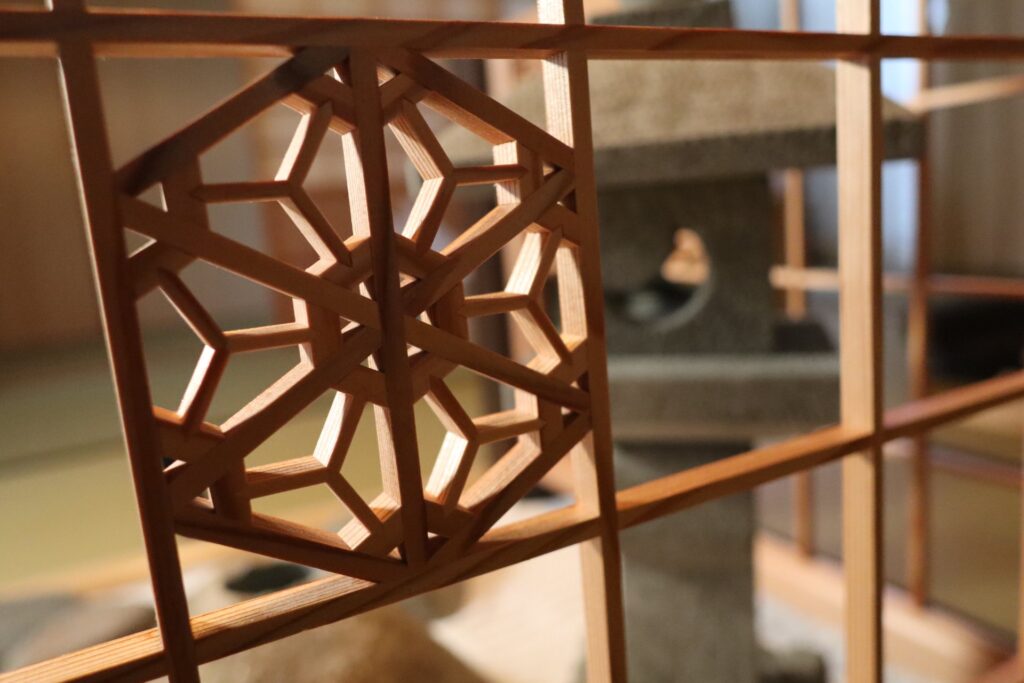
Kumiko is made by cutting grooves and holes into finely sawn strips of wood, then assembling each piece by hand. Even the slightest error in measurement keeps the pattern from coming together cleanly, so the craft demands precise work and years of experience. Kumiko has long been used in the fittings of homes, temples and shrines, filling rooms with soft light and gentle shadow.
Held together by neither nails nor glue, the pieces of wood support one another to keep their form. In this structure lives the wisdom of Japanese woodworking, which has always sought to understand the nature of its materials and make the most of them.
2. Wishes Woven into Patterns
Many kumiko patterns are inspired by plants and nature. One of the best known is asa-no-ha, the hemp leaf. Because hemp grows tall, straight and strong, the motif has long been cherished as a wish for children to grow up healthy.
These patterns are not only beautiful; they also carry quiet hopes for everyday life. When light passes through them, shadows emerge and shift with the hours, one of the special pleasures of kumiko. By repeating the same shape again and again, the lattice reveals two faces: from afar it resembles woven fabric, while up close each individual line of wood stands out.
3. Rakutei “Chanoyu Kumiko”: A Garden Framed by Kumiko
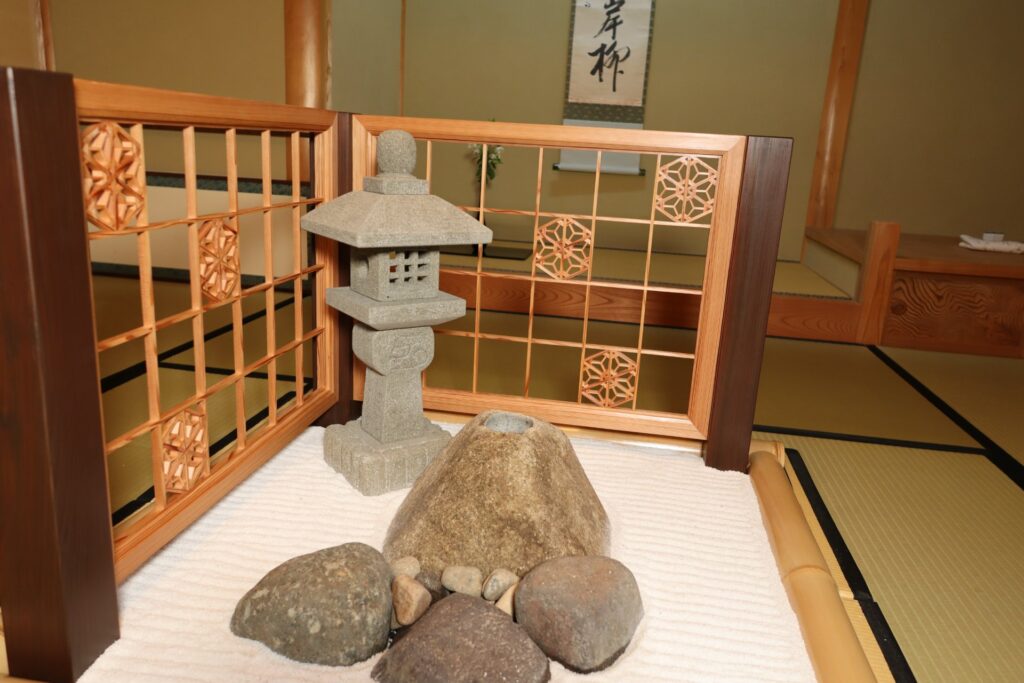
The Rakutei 100 Series “Chanoyu Kumiko” is a special edition of our Rakutei “Chanoyu” (tea ceremony) garden, in which the bamboo fence has been replaced with kumiko. Delicate geometric patterns, assembled by hand by skilled craftsmen, rise up across the fence.
At the heart of the garden sits a tsukubai, a stone water basin that conveys the spirit of the tea ceremony. Around the basin, the traditional accompanying stones are arranged in harmony, while a stone lantern at the back left softly lights the way. As light streams in, the shadows of the kumiko fall across the white sand, and the warmth of the wood lends a quiet elegance to the garden of stone and sand.
Wood joined without nails, patterns that carry heartfelt wishes: the handcrafted beauty of kumiko resonates quietly with a landscape of stone and sand. We invite you to experience this artisanal craft up close in a small Japanese garden that suits both Japanese-style and Western-style rooms.
▶ View the Rakutei 100 Series “Chanoyu Kumiko” product page
