


When we gaze at a Japanese garden, especially a karesansui (dry landscape garden), we picture flowing water in the white gravel and mountains or islands in the stones. This way of seeing one thing as another and savoring it is called mitate. In this article, we look at mitate, an idea deeply rooted in Japanese culture, both in the garden and in everyday life.
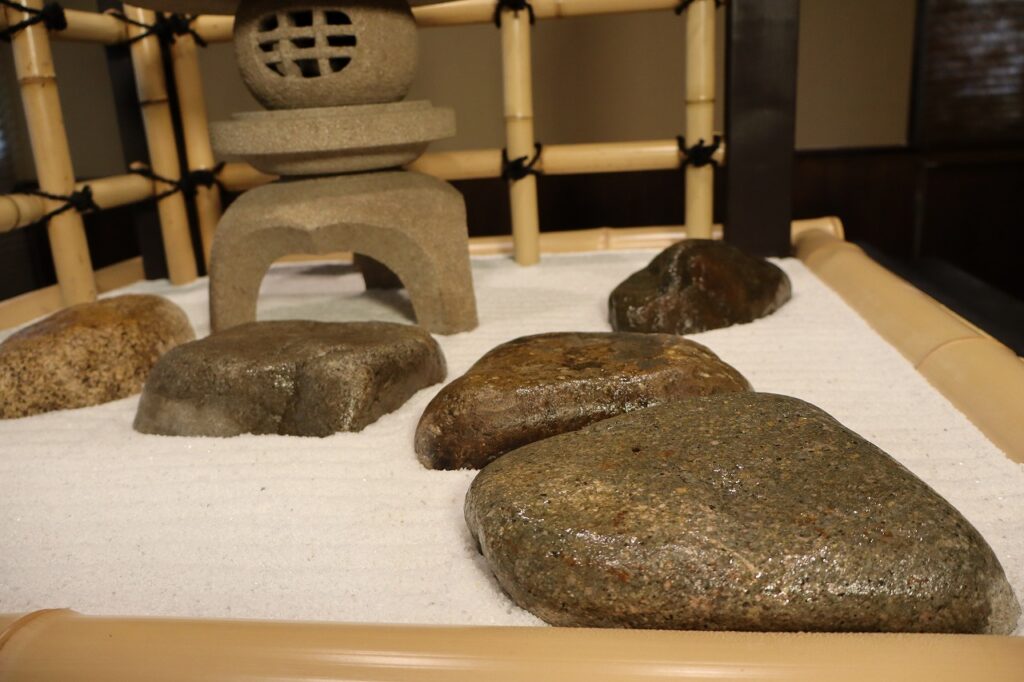
1. What Is Mitate?
Mitate means looking at what is in front of you and enjoying it as something else. In classical Japanese poetry (waka), falling cherry petals have long been likened to snow. In the tea ceremony, too, people have valued the art of “mitate”: bringing vessels and objects that were never made as tea utensils into the tea room and using them in a new way.
Rather than seeing things only as they are, you lay another landscape over them in your mind. That is the charm of mitate. This playful spirit lives on in many forms in Japanese life, from language and tableware to gardens.
2. Karesansui: A Garden of Mitate
A karesansui garden expresses mountains and water without using any water at all. White gravel stands for the surface of the sea or a river, and stones stand for islands or mountains. The patterns raked into the gravel, called samon, suggest flowing currents and gentle waves. Although there is not a single drop of water, a running river or a calm sea unfolds in the mind of the viewer. It is the power of mitate that lets us feel vast nature within a small space.
Karesansui gardens are often found at Zen temples, and they have long been cherished as places to sit quietly and calm the mind. In the end, what the garden depicts is up to the person looking at it.
3. Mitate in Rakutei “Kamiari”
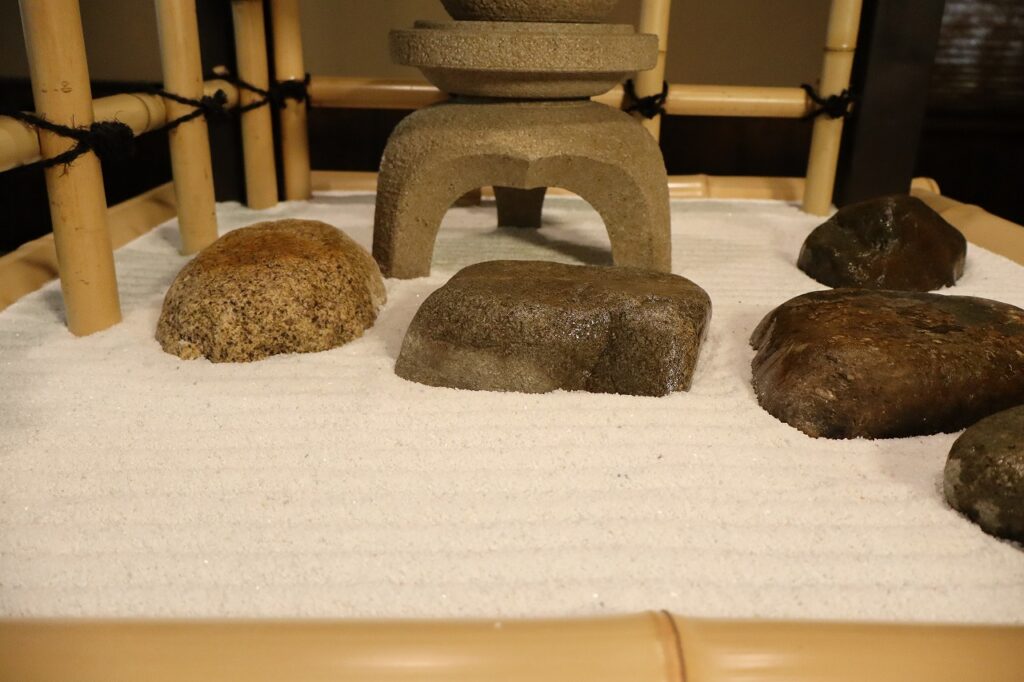
Rakutei “Kamiari” is also a dry landscape garden created in the spirit of mitate. The white gravel represents the surface of water, and the raked samon make the current stand out as it flows from the mizuwake-ishi (water-dividing stone) at the back right, from upper right to lower left. The river-stone stepping stones vary in shape, yet together they form a single path that leads to the yukimi stone lantern beyond. While sitting in your room, you can picture a light glowing by the water. A small garden becomes a doorway to a much larger landscape.
You do not need special knowledge to enjoy mitate. Simply look quietly and wonder, “What does this stone look like to me?” and the garden will show you a different face each day.
Mitate is a Japanese way of finding richness through imagination rather than through owning many things. What landscape do you see on the white gravel? Amid your busy days, why not set aside a quiet moment to enjoy the pleasure of mitate?
