


A special, slightly raised space set in one corner of a Japanese room: this is the tokonoma, or alcove. A hanging scroll is displayed and flowers are arranged there, quietly announcing the arrival of each season. In this article, we introduce the role of the tokonoma, how it is decorated, and how to enjoy its spirit in today’s homes.

1. The Tokonoma, a Stage for Hospitality
The tokonoma is a space unique to Japanese homes, said to have taken shape within the shoin-zukuri style of architecture in the Muromachi period. When welcoming guests, the seat closest to the tokonoma is considered the seat of honor, a place to receive important guests. Through its decorations, the host conveys care and a sense of the season to guests. The tokonoma is, so to speak, the small stage of a Japanese room.
Beside the tokonoma stands a pillar called the tokobashira. Fine wood that shows the character of the tree is often chosen for it, and it has been regarded as an important element expressing the atmosphere of the room.
2. Scroll, Flowers and Ornament
The basic decorations of the tokonoma are a hanging scroll, flowers and an ornament. For the scroll, calligraphy or a painting suited to the season or the theme of the day is chosen, and flowers are arranged modestly, as if growing in the fields. By changing the scroll and flowers with the seasons, the same room shows a new face with every visit. In the tokonoma of a tearoom, the scroll has been especially cherished as a way to convey the spirit of the tea gathering. By not displaying too much and leaving empty space, each piece stands out all the more.
3. Enjoying It Even Without a Tokonoma
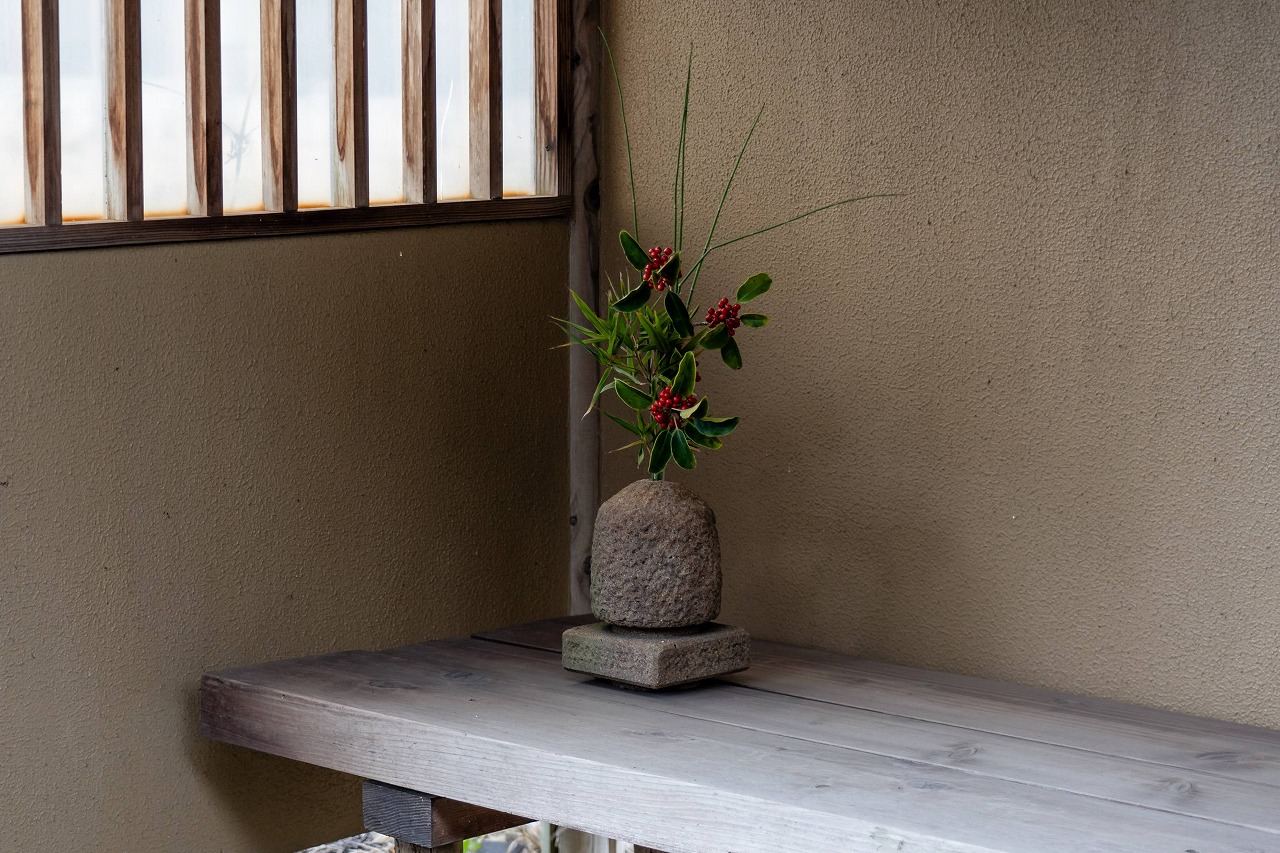
A single-flower vase, or ichirinzashi, is a vase for just one flower. Even without many flowers, a single bloom conveys the season and brings a dignified beauty to a space.
Even in a home without a tokonoma, you can bring its spirit into your life. Try treating the top of a shelf or a corner of a room as a small “tokonoma” for seasonal flowers. The Toooro “Yukimi Hoju” bud vase is made by upcycling the hoju, the jewel-shaped top of a stone lantern that was actually used in a Japanese garden, into a vase. The hoju carries the meaning of granting wishes, and together with a single flower, it adds charm to everyday life.
The tokonoma is a place for feeling the seasons and welcoming people within a limited space. Why not begin by displaying a single flower, and bring the spirit of the tokonoma into your life?
