

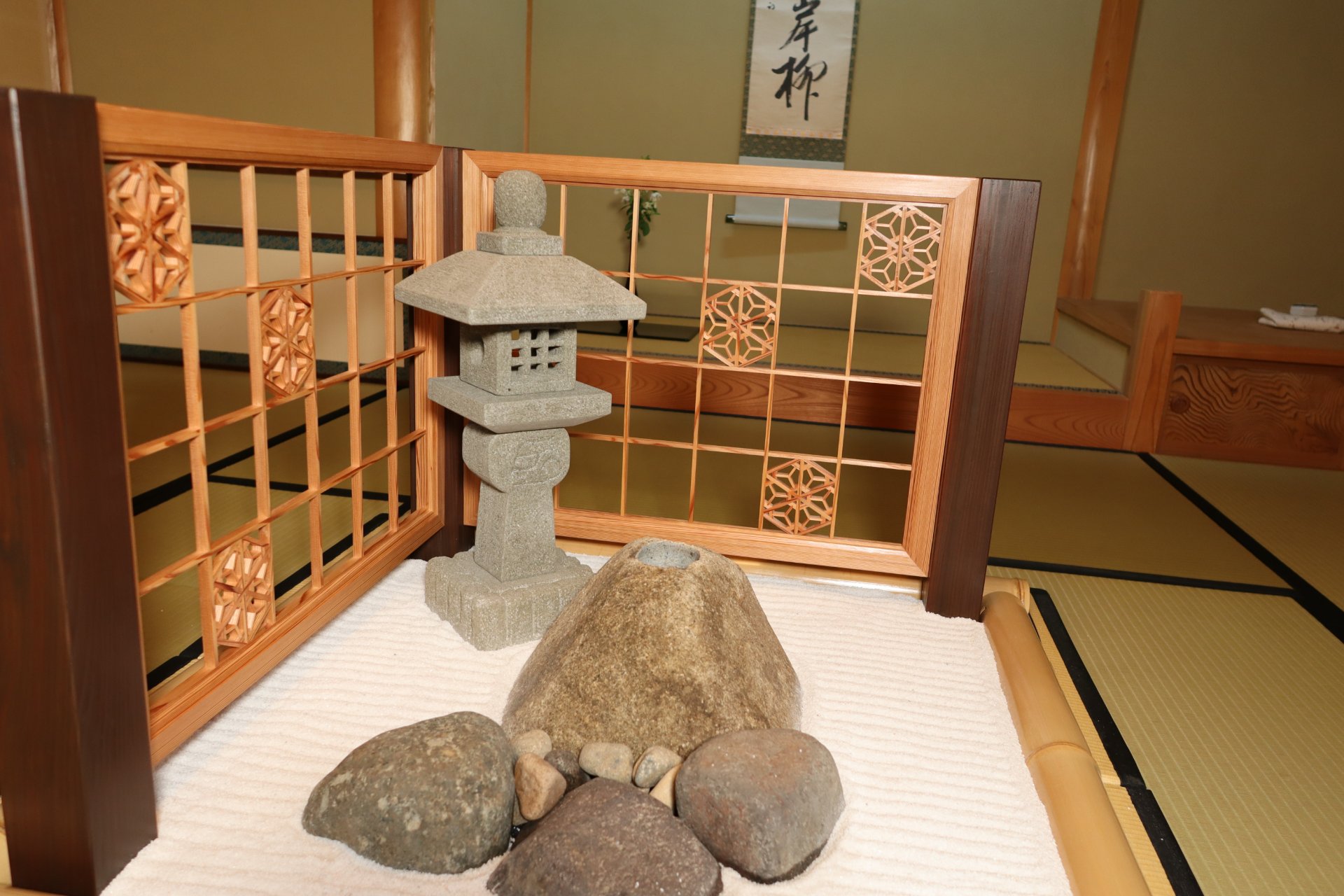
Traditional Japanese houses often have a long, narrow strip of wooden flooring between the rooms and the garden. This is the engawa. Neither fully inside nor fully outside, it is an in-between place — and when you sit down there, the garden suddenly feels much closer. In this article, we introduce the engawa, which has long connected Japanese homes with their gardens.
1. A Gentle Link Between Inside and Outside
The engawa is a wooden floor that runs along the outer edge of a tatami room, sheltered beneath the deep eaves (noki). With the shoji screens open, it becomes part of the room; with them closed, it serves as a passage facing the garden.
Rather than dividing inside and outside with a solid wall, the Japanese home places a single layer of “in-between space” (ma) between them. In this way, the garden has been enjoyed as part of everyday life. The eaves soften rain and strong sunlight, while breezes and the feeling of the seasons reach the room by way of the engawa.
2. Nure-en and Kure-en
There are two main types of engawa. One that sits outside the storm shutters (amado), where it may get wet in the rain, is called nure-en (“wet veranda”). One that sits inside the storm shutters is called kure-en.
Both were places to relax: to sit and look at the garden, to bask in the sun, or to chat with a neighbor who had dropped by. On summer evenings, people would often sit on the engawa to enjoy the cool air. Because visitors could take a seat there without going through the front entrance, the engawa was also a place that brought people together.
3. Viewing the Garden from the Engawa
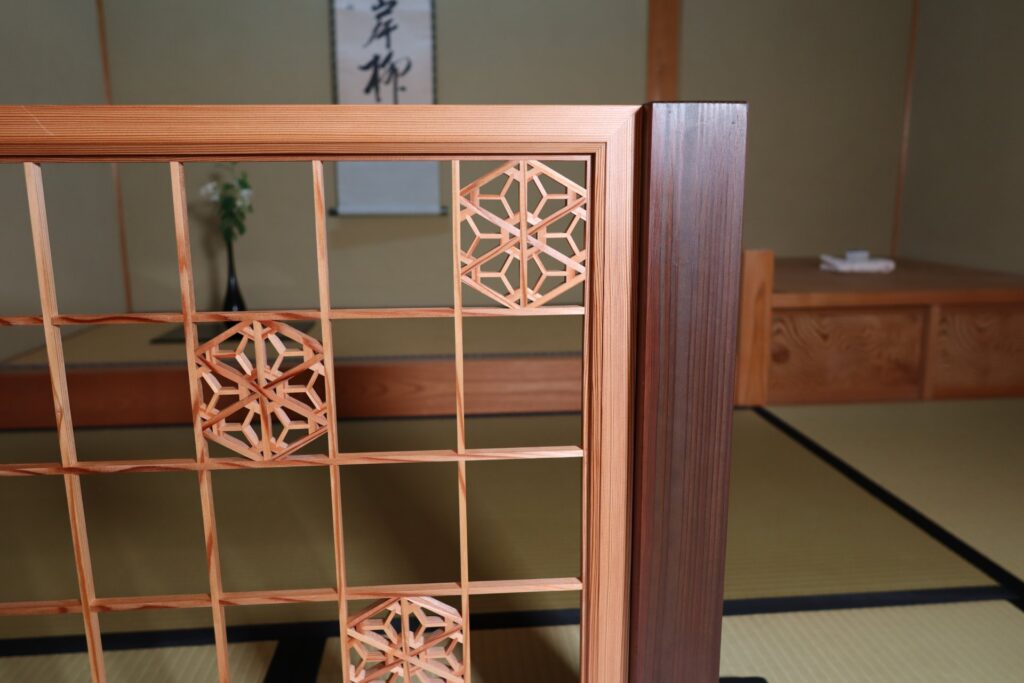
Many Japanese gardens are designed not only to be walked through, but also to be contemplated from a seated position. When you sit on the engawa, your eye level drops, and the stones and white sand settle calmly into view. The eaves and pillars frame the scenery, so that the garden begins to look like a single painting.
The direction of the light shifts from morning to evening, and the shadows change with the seasons. Taking time to savor the garden without hurry is one of the special pleasures of the engawa. Simply sitting and looking, doing nothing else, can bring a quiet calm to the mind.
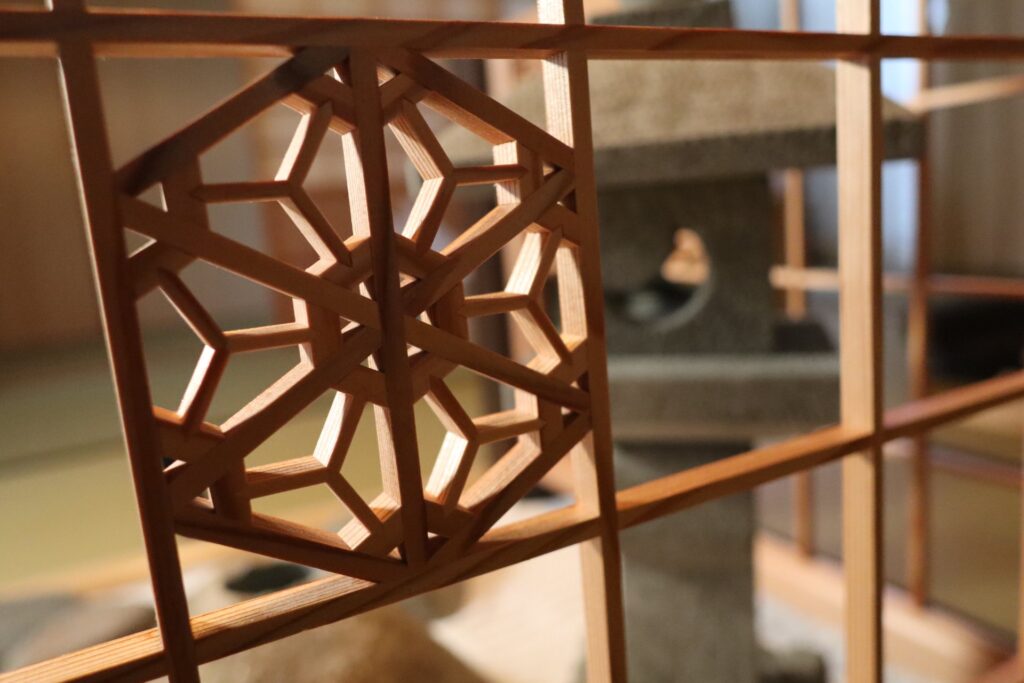
Few homes have an engawa today, but the pleasure of “viewing a garden from a room” can still be part of modern life. Rakutei 100 “Chanoyu Kumiko” is a small Japanese garden measuring 100 cm wide and 100 cm deep, designed to suit both Japanese-style and Western-style rooms. When light falls on it, the shadows of the kumiko lattice are cast onto the white sand, changing in expression as time passes. Why not create a small scene in your room, like a view from the engawa?
