

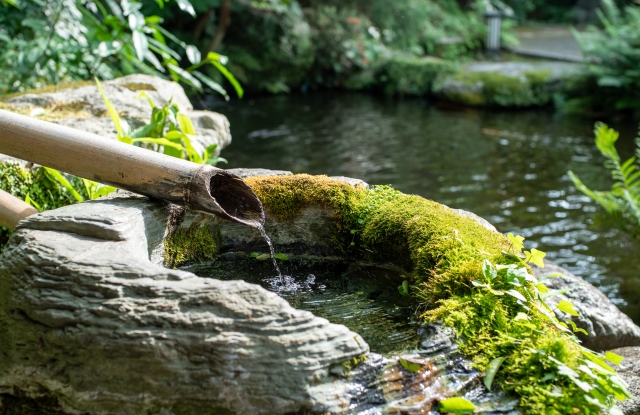
In a quiet Japanese garden, a clear “clack” rings out. The shishi-odoshi, a bamboo water device, is surely one of the scenes many people imagine when they think of a Japanese garden. Its simple mechanism holds the wisdom of people long ago and their love of nature. In this article, we introduce how the shishi-odoshi works, where it came from, and the spirit of enjoying water and sound in a Japanese garden.
1. How Water Creates the Sound
A shishi-odoshi consists of a bamboo tube cut at an angle and a stone placed beneath it. Water slowly fills the tube, and when it is full, the weight tips it over to pour the water out. The lightened tube swings back to its original position, striking the stone below and sending out its sound. Without electricity or machinery, it quietly repeats the same movement, powered only by flowing water.
How long it takes for the tube to fill depends on the amount of water and the thickness of the bamboo. So the interval between sounds differs in every garden, giving each its own rhythm.
2. From a Tool to Protect Fields to a Garden Feature
The shishi-odoshi is said to have originally been a tool for scaring away deer and wild boars that damaged fields. Its name, meaning “deer scarer,” is a trace of that origin. It is also known as sozu. In time, the shishi-odoshi came to be placed in gardens so that people could enjoy its sound. Shisendo in Kyoto is widely known as a garden with a shishi-odoshi. This simple device, which creates sound with the power of water alone, embodies the wisdom of people who lived together with nature.
3. Stillness Heightened by Sound
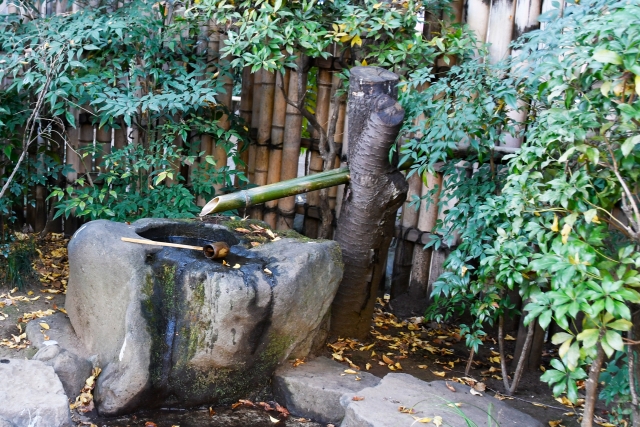
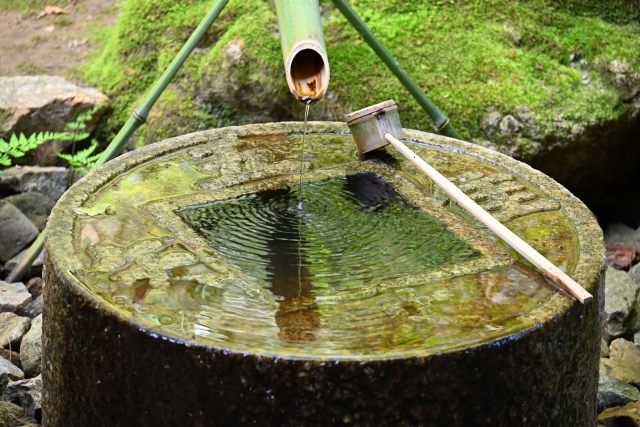
Once the shishi-odoshi sounds, silence follows for a while. Because of that pause, the stillness until the next sound feels all the deeper. Heightening silence through sound is a distinctly Japanese sensibility. The sound of water falling from a bamboo spout, called a kakei, into a stone basin also adds a refreshing charm to the garden.
In Japanese gardens, it has long been valued to enjoy the garden with all five senses: not only by looking, but also through sound, fragrance and the air of the season. The shishi-odoshi teaches us the pleasure of a garden to be listened to.
When you listen closely to the sound of water, time seems to flow more slowly. Perhaps it is in our busy days that moments of entrusting ourselves to such quiet sounds matter most. The next time you visit a Japanese garden, listen not only with your eyes, but also to the music of water.
