


A single flower placed in the tokonoma alcove or in the entrance hall. That alone softens the atmosphere of a room and brings in a sense of the season. You don’t need many flowers: the charm of the ichirinzashi (single-flower vase) is that it lets you take your time with the form and color of one bloom. Here we introduce how the single-flower vase has been enjoyed in Japanese life, along with Rakutei’s own single-flower vases.
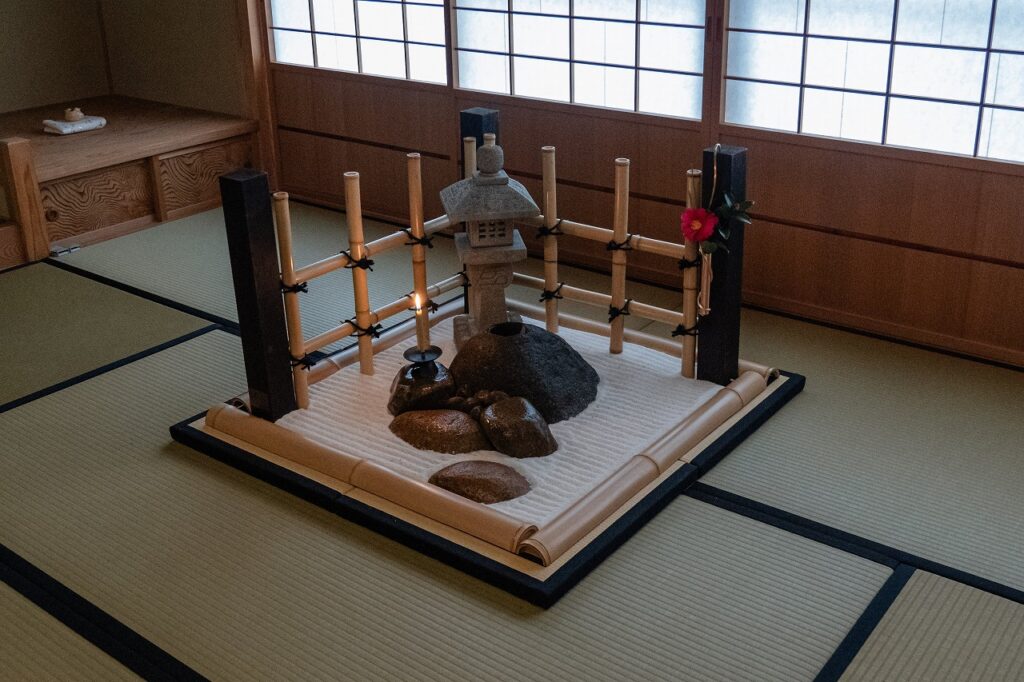
1. The beauty of “one flower,” born in the tea room
In the world of the tea ceremony, the flowers displayed in the tea room are called chabana. Rather than being arranged lavishly, chabana are traditionally arranged with restraint—a single seasonal flower or just a few branches. Choosing flowers that can only be found in that particular season is also considered an essential part of chabana. As the words handed down as a teaching of Sen no Rikyu say, “Arrange flowers as they are in the field”: a natural style that recalls how the flower once grew in the wild has long been valued. Precisely because there is so little, the viewer’s heart turns toward the flower, and a quiet hospitality is born.
2. A single-flower vase to accompany Rakutei
Rakutei’s single-flower vase is an option for adding flowers to Rakutei, the indoor karesansui (dry landscape) Japanese garden. Like the single flower in a tea room, its touch of color brings a sense of life to a quiet garden expressed with stone and sand. The spiral is brass and the vase is copper; each piece is handmade by a blacksmith and is one of a kind. The spiral, formed by heating brass to a high temperature, coiling it and drawing it out, has a truly beautiful expression. It can be installed easily, simply by hooking it onto Rakutei’s post. The copper tube is available in a bright, polished finish or with a verdigris (green patina) finish.
3. The “Yukimi Hoju Ichirinzashi,” born from a stone lantern
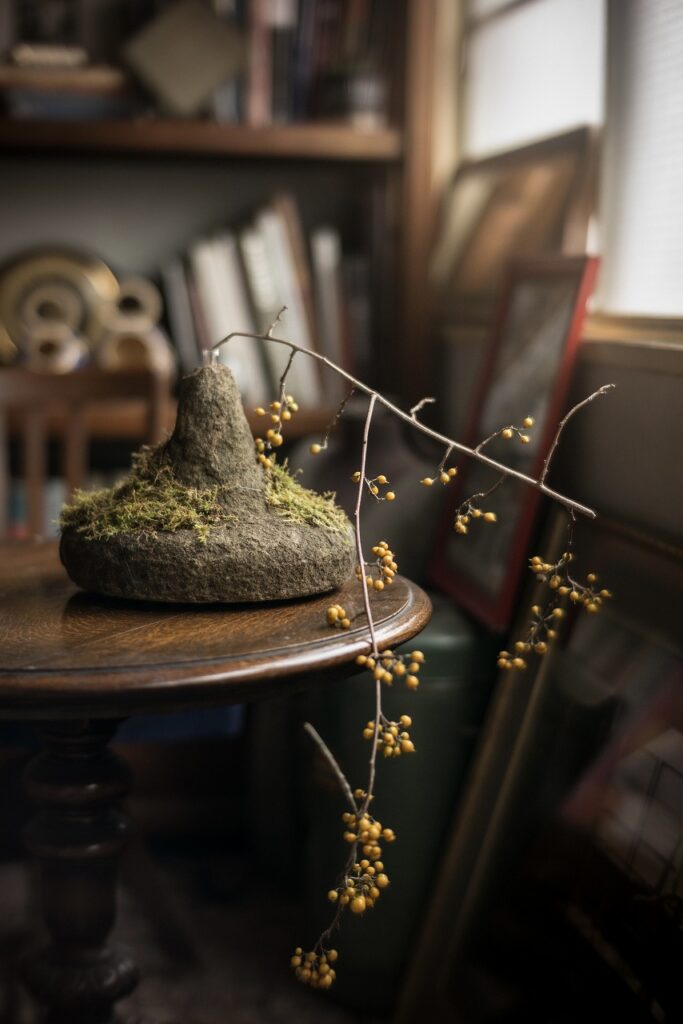
The Toooro vase “Yukimi Hoju Ichirinzashi” upcycles the hoju of a genuine stone lantern that was actually used in a Japanese garden. The hoju is the important finial placed at the very top of a lantern; written with characters meaning “treasure jewel,” it carries the wish for dreams to come true. The weathering and moss built up over many years remain just as they are, adding a touch of wabi-sabi to the flowers you arrange. Please note that this product is a vase only; please provide your own flowers.
The ichirinzashi is a simple way to enjoy both the pleasure of admiring flowers and the Japanese spirit of welcoming the seasons into daily life. Even a sprig from the garden or a wildflower by the roadside becomes a small landscape of its own, depending on the vessel. The time spent watching a flower bloom and gradually change will surely bring a quiet richness to your days. We hope you find your own favorite flower and enjoy a moment of Japanese calm.
▶ See the Rakutei option “Ichirinzashi” product page (in Japanese)
▶ See the Toooro vase “Yukimi Hoju Ichirinzashi” product page (in Japanese)
